
How to Make 2026 the Year You Stop Cracking Under Pressure and Start Leading at Your True Capacity
Most leaders try to get there by adding more skills, more courses, more books. But what if the real shift comes from changing what you're made of as a leader, not just polishing what you already have?
If you want 2026 to be your most successful year yet – whether as a professional, a business owner, or a formal people leader – one question sits above all the others:
Can you lead at the level your goals will demand of you?
You can have:
- The cleverest strategy.
- The best intentions.
- The right opportunities.
But if, under pressure, you:
- Avoid the hard conversations,
- React defensively when challenged,
- Procrastinate on the work that truly matters,
- Or shrink back when you're needed most…
…your results eventually hit a ceiling.
That ceiling is not just about skills. It's about capacity:
- Your capacity to stay calm when the heat rises.
- Your capacity to think clearly when stakes are high.
- Your capacity to act in line with your values instead of your fears.
And that capacity lives in your self-leadership.
Why We Naturally Turn to Training (and Why It Only Takes Us So Far)
When most people realise, "I need to grow as a leader," they do what they've been taught to do:
- They buy books on leadership, coaching, influence or resilience.
- They sign up for a two-day workshop on "difficult conversations" or "managing performance".
- They attend webinars on emotional intelligence, time management and executive presence.
None of that is bad. In fact, it can be very helpful.
The standard leadership development path often looks like this:
1. You step into a bigger role
Maybe you're promoted, given a team, or you decide it's time to take your business to the next level. You know you can't just "wing it" anymore.
2. You go hunting for input
You ask for recommendations, find bestselling leadership books, sign up for courses. You want to do the right thing, so you learn the models, frameworks and language.
3. You genuinely understand the concepts
In the training room (or on the page), it all makes sense:
- How to give feedback.
- How to delegate.
- How to handle conflict.
- How to influence stakeholders.
4. You leave motivated and hopeful
You think, "Next time that situation comes up, I'll do it differently. I've got this now."
Then real life happens.

When Real Life Walks Into the Room
The test of your leadership is never in the training room. It's in those real, messy, emotional moments that follow.
- A senior stakeholder challenges your idea harshly in front of others.
- A team member keeps missing deadlines and you're tired of chasing.
- You're overloaded, someone asks for "just one more thing," and you say "yes" even though you're at breaking point.
- A conflict between colleagues is quietly poisoning the team, and you keep hoping it will sort itself out.
In those moments, something familiar often happens:
Your chest tightens. Your mind races. Your old script kicks in.
You:
- Snap back defensively.
- Dodge the conversation, again.
- Numb yourself with busyness instead of doing the important work.
- Over-explain, over-apologise or disappear.
And afterwards, you think:
"I literally just learned a better way to handle this. Why did I default to the same old reaction?"
It's not that you're lazy or weak. It's that information alone doesn't change your capacity.
Most leadership training is like that:
- It upgrades your knowledge.
- It enhances your language.
- It polishes the surface.
But under enough heat, the same cracks reappear.
The Metal and the Heat: A Different Way to Think About Leadership Development

Imagine a piece of metal.
At room temperature, it's strong and reliable.
Turn the heat up, and it still performs well – for a while.
But once the temperature passes a certain point, it begins to:
- Bend,
- Warp,
- Or even melt.
Now imagine polishing that metal.
You can:
- Buff it until it shines.
- Smooth out some of the rough edges.
- Make it more impressive to look at.
But polishing does not change how much heat it can handle.
There's a point beyond which it will always fail.
This is how most leadership development operates:
You go on a course and get "polished". You return with nice slides, new language and a clearer understanding of what "good" leadership looks like.
But your inner material – the way you react under real heat – remains pretty much the same.
So when pressure rises:
- Politics intensify.
- Visibility increases.
- The stakes soar…
…you perform well up to a point, and then your old patterns show up again.
You don't need more polish. You need to change what you're made of.
And that doesn't happen in a typical workshop.
It happens in something more like a crucible.
A crucible is an environment of controlled, purposeful heat designed to transform material – not just shine it up, but change its properties so it can withstand far greater pressure.
For leaders, the question becomes:
How do I step into a "leadership crucible" that actually changes my capacity to handle heat – instead of just learning more theory?
To answer that, we need to look at the science.
Why "Try Harder Next Time" Almost Never Works (The Science in Plain English)

Most of us have lived this cycle:
- We do something we're not proud of under pressure.
- We reflect and say, "Next time I'll do better."
- Next time comes… and we repeat the same behaviour.
To understand why, here's a simplified, human-sized version of the neuroscience behind it.
Your fast brain vs your thinking brain
You have:
- A fast, automatic brain that runs habits, reflexes, survival patterns.
- A slower, reflective brain that thinks, reasons, sets intentions.
In the training room or while journalling at home, your reflective brain is in charge:
- You see clearly.
- You understand what you should do.
- You make good plans.
But when stakes feel high – someone is angry, you feel exposed, you might disappoint or fail – your nervous system detects threat.
Under threat, your fast brain takes over:
- It scans for danger.
- It runs familiar scripts that once protected you.
- It prioritises short-term safety over long-term growth.
Those scripts might say:
- "Defend yourself."
- "Avoid conflict at all costs."
- "Say yes so they don't get upset."
- "Don't speak up, it's safer to stay quiet."
In that moment, the polished ideas from your last workshop aren't gone – they're just overpowered by deeper, older patterns.
Why insight isn't enough
This is why so many smart, well-trained people find themselves saying:
"I know better. Why don't I do better?"
Because knowing lives mostly in your reflective brain.
Doing – especially under pressure – lives in your patterned brain.
To change your behaviour in the heat of the moment, you need to:
- Bring those patterns into the light.
- Design new responses that feel safe enough to use.
- Practice those responses enough times that they become the new automatic.
That doesn't happen in a single inspirational session. It happens over repeated, structured practice – the kind of practice that literally reshapes your brain's wiring (what neuroscience calls neuroplasticity).
Why around 90 days matters
Research and experience both suggest something important:
New ways of thinking and responding need time and repetition to move from "effortful effort" to "this is just who I am now."
Around 90 days of consistent practice is often enough to create real shifts in identity, habit and capacity – if the practice is well-designed.
So if you want 2026 to be different, the question is not:
"What else can I learn?"
It's:
"What structured environment will I place myself in, over the next 90 days, that will actually transform how I respond under pressure?"
That's what a leadership crucible really is.
What a True Leadership Crucible Needs to Include
If you wanted to design your own "leadership crucible" – an environment that changes what you're made of, not just what you know – what would it need?
At minimum, it would need:
1. Focused Scope
Not 50 goals and personality traits. But one high-impact pattern that, if it changed, would upgrade your entire leadership life.
2. Real-Life Triggers
Not abstract case studies. But your difficult conversations, your stakeholder pressures, your avoidance habits.
3. Daily, Bite-Sized Practice
5–10 minutes a day of:
- Noticing your state,
- Visualising key moments,
- Rehearsing new responses,
- Reinforcing a clearer leadership identity.
4. Tracking and Honest Reflection
A simple way to log:
- When you were triggered,
- How you responded (old vs new script),
- What you learned,
- Where you saw even a tiny improvement.
5. External Eyes and Support
Someone who can:
- See your blind spots,
- Encourage progress you're overlooking,
- Challenge you when you want to shrink back.
6. Time-Bound Container
A clear, committed journey:
"For the next 90 days, I'm in the crucible. I'm not just studying leadership; I'm transforming my capacity to lead."
When you combine those elements, you're no longer just polishing the metal. You're changing its composition.
That's the heart of this whole idea: If you want next year to be your most successful leadership year so far, you don't just need more information – you need a structured crucible that transforms how you show up under pressure.
Only after that concept has landed does it make sense to talk about a specific way to step into such a crucible.
Introducing: The Leadership Crucible – A 90-Day Self-Leadership Transformation
For leaders who don't just want more polish, but a genuine upgrade in capacity.
After years of working in leadership development and studying the science of self-leadership and behaviour change, I've designed The Leadership Crucible:
A 90-day, science-based self-leadership journey that focuses on transforming one high-impact pattern in how you lead yourself under pressure – so you can lead at a higher level with calm confidence and trusted influence.
What We Actually Do Together
We don't try to change everything about you at once. Instead, over 90 days, we:
1. Identify Your Crucible Pattern
Through a self-leadership assessment and a 60-minute consultation, we pinpoint the one pattern that most limits your leadership when things get hot.
2. Design Your Transformation Blueprint
We co-create a personalised plan that includes:
- Your leadership identity statement.
- A tailored affirmation and visualisation script.
- A realistic 5–10 minute daily practice.
- A simple daily log to track triggers, responses and "wins of the day".
3. Build Your Daily Crucible Practice (5–10 Minutes)
Each day, you'll:
- Do a short mindfulness reset.
- Mentally rehearse a real leadership moment differently.
- Reinforce your new identity and response through your script.
4. Track Real Life, Not Theory
You'll log:
- Where you were triggered,
- How you responded (old vs new),
- What you learned,
- One moment where you showed up more like the leader you want to be.
5. Get Weekly Feedback and Support
Each week I personally review your progress, send tailored feedback, highlight patterns and help you course-correct.
6. Deepen Through 1:1 Coaching
Across the 90 days, we have three individual coaching sessions plus a final integration session to:
- Work on live situations,
- Unpack stuck points,
- Lock in your growth.
By the end, your goal is not to know more, but to consistently respond differently when it counts.
What Life Looks Like on the Other Side of the Crucible
Right now, your patterns have a cost.
They show up as:
- The comment you wish you hadn't made in a tense meeting.
- The hard conversation you keep postponing until something breaks.
- The strategic work that lives permanently on the "later" list.
- The opportunities you quietly talk yourself out of because you're not sure you're "ready".
When you change what you're made of as a leader, those same situations begin to play out differently.
You become the kind of leader who:
Stays calm and clear when the stakes are high
You can feel the pressure without being ruled by it. People come to trust your judgement precisely because you don't panic, overreact or disappear when things get tough.
Has the conversations you used to avoid
Instead of circling around issues, you address them early, honestly and respectfully. Relationships deepen, performance improves, and you stop carrying silent frustration around with you.
Protects time and energy for what really matters
You say "yes" and "no" from a place of clarity, not guilt. The important work actually gets done, and your results begin to reflect your true capability.
Shows up with grounded confidence, not performance
You're no longer burning energy pretending to be in control while doubting yourself inside. You know how you'll respond under pressure, and that quiet confidence is obvious to others.
Attracts and handles bigger opportunities
Because people experience you as steady, thoughtful and reliable under pressure, they start to trust you with:
- More visible projects
- Higher-stakes responsibilities
- Rooms and conversations you once felt on the edge of
And perhaps most importantly:
You can trust yourself
You're no longer hoping you'll "do better next time." You've put in the work. You've tested yourself in real situations. You've seen yourself respond in new ways.
You're not perfect. But you know, deep down:
"I can handle more heat than I could before.
I've grown. I've changed. I'm ready for what's next."
What That Actually Means for Your Results
When this new version of you becomes normal, your external world starts to shift too.
You may find that:
Your performance stops being "up and down" and becomes consistently strong
Because you're no longer derailed by pressure and emotion, your work shows a level of reliability that decision-makers notice.
You become the person people turn to when it really matters
In moments of tension or uncertainty, colleagues and senior leaders look to you for perspective and direction. Your voice carries more weight in the room.
You're trusted with bigger roles and stretch assignments
Promotions, projects and opportunities that once felt slightly out of reach now feel appropriate. Others see you as someone who can carry more, not just talk about more.
Your team or stakeholders respond differently to you
Tough conversations lead to progress instead of shutdown. People feel both safe and challenged around you, and that shows up in engagement and results.
Your reputation quietly upgrades
You become known as the person who:
- Keeps their head when others are losing theirs.
- Tackles issues instead of avoiding them.
- Delivers on what truly matters, not just what's urgent.
Your life outside work improves too
You carry less internal drama home. You have more mental space, more emotional energy, and more confidence that you can handle whatever next year throws at you.
Put simply:
You're not just "coping" at your current level —
you're leading at a higher level and your world begins to reorganise around that.
This is the 2026 version of you that The Leadership Crucible is designed to serve: the version that doesn't just survive more pressure, but is ready for and worthy of the opportunities that come with it.
Who The Leadership Crucible Is For
This is for you if:
- You're an aspiring, emerging or experienced leader who's ready to step up to a higher level of responsibility and impact.
- You recognise yourself in the patterns we've talked about – reacting, avoiding, overloading, shrinking back.
- You're willing to commit 5–10 minutes a day over 90 days to your own transformation.
- You value depth over quick hacks and are ready for a serious inner upgrade.
This is not for you if:
- You want change without effort.
- You're only interested in more theory.
- You're not ready to be honest about your patterns.
Founding Cohort: 20 Places at a Pioneering Rate
This program is being designed to roll out inside organisations at around:
£2,000 per leader.
Before that happens, I'm opening a Founding Cohort of 20 people who will go through The Leadership Crucible with me personally.
As a founding participant, your investment is:
£200
One-time payment for the full 90-day journey.
Why so low?
Because I want:
- Real leaders.
- Real journeys.
- Real stories of transformation.
Your role as part of this first group is to experience the crucible fully and, if it genuinely serves you, to be one of the leaders whose story helps bring this into organisations.
What You Get as a Founding Participant
Self-Leadership Assessment
60-Minute Deep-Dive Consultation
Personal Transformation Blueprint
Daily Crucible Practice (5–10 minutes)
Daily Log & "Win of the Day" structure
Weekly personalised feedback from me
Three 1:1 coaching sessions over the 90 days
Final integration session to lock in your growth
About Your Guide – DJ Sobanjo
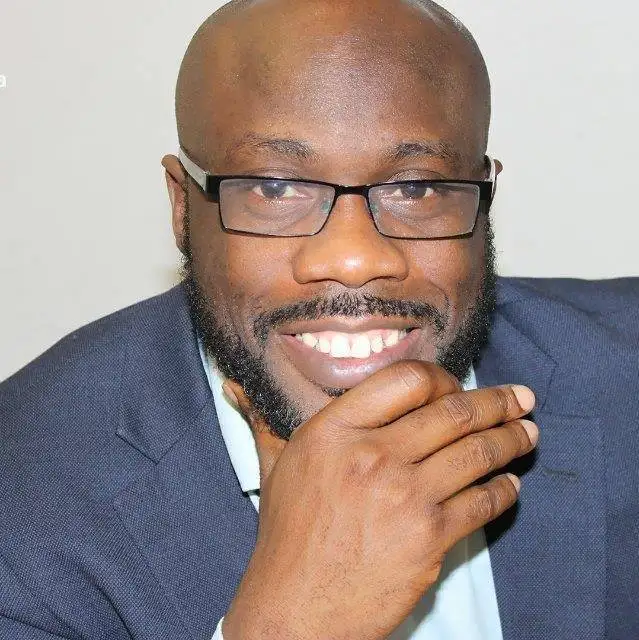
I'm DJ Sobanjo, a leadership development consultant, coach and trainer.
For years I've been helping leaders and high-potential professionals grow their impact – not just by learning new models, but by changing who they are in the moments that matter.
Through Maximised Leadership, I've worked with emerging and established leaders to:
- Build self-awareness and self-mastery,
- Lead others with clarity and confidence,
- Deliver results without burning out.
The Leadership Crucible brings together neuroscience, self-leadership research and practical coaching into a focused 90-day experience that changes what you're made of as a leader – not just what you know.
If This Is the Leader You Want to Be in 2026…
If you've read this far, you already know something important:
You don't just want another busy year.
You want 2026 to be the year you:
- Stop cracking at the same heat level, and
- Start leading at the capacity you know you're capable of.
You've seen the picture:
- A calmer, clearer you under pressure.
- A you who has the conversations you used to avoid.
- A you who is trusted with bigger responsibilities and opportunities.
- A you whose reputation quietly upgrades because people know you'll show up well when it matters.
That version of you is not a fantasy.
It's the natural result of putting yourself in the right crucible and doing the work, consistently, over time.
The Leadership Crucible is that kind of environment:
a focused, 90-day, science-based journey designed to help you become that leader in real life, not just in your imagination.
If that's the version of you you want to step into in 2026, this Founding Cohort is your invitation.
You bring your honesty, commitment and willingness to grow.
I'll bring the structure, science and support.
Together, we'll make sure that when the heat rises next year, you don't just cope – you lead.